Professional LED Lighting Manufacturer for Custom Lighting Solutions
The demand for efficient, controllable, and application-specific lighting has changed the way commercial and residential projects approach luminaire selection. Standard products remain suitable for many installations, but complex architectural, landscape, hospitality, retail, and residential projects often require different beam angles, dimensions, color temperatures, mounting methods, control interfaces, and environmental protection levels.
For this reason, choosing a professional LED lighting manufacturer is no longer limited to comparing unit prices and wattage. A capable manufacturing partner needs to understand how optical design, thermal management, electrical components, mechanical construction, production processes, and project requirements interact. The objective is not simply to produce a fixture that turns on, but to deliver predictable photometric performance, mechanical reliability, and compatibility with the intended installation environment.
Why Custom LED Lighting Is Becoming More Important
LED technology has become the dominant platform for many commercial and architectural lighting applications because of its high efficiency, controllability, compact size, and long operating life. However, the lighting requirements of a hotel façade are very different from those of a retail display, private residence, landscape pathway, or industrial facility.
Project teams increasingly specify lighting according to measurable performance rather than appearance alone. Typical requirements include luminous flux, efficacy, color rendering, correlated color temperature (CCT), beam distribution, dimming behavior, ingress protection, operating temperature, lifetime, and control compatibility.
Energy performance is also becoming closely connected with lighting controls. Current commercial projects increasingly consider occupancy sensing, daylight response, scheduling, dimming, and networked control alongside the luminaire itself. Recent market research shows continued growth in luminaire-level lighting controls, while remaining barriers include product awareness, installation skills, and system integration.
This creates an opportunity for custom lighting solutions that are designed around the project rather than forcing the project to adapt to a fixed product.
What Defines a Professional LED Lighting Manufacturer?
A professional LED lighting manufacturer should be evaluated across the complete product lifecycle, from engineering and component selection to production, testing, packaging, and technical support.
One important distinction is between customization of appearance and engineering customization. Changing housing color or adding a logo is relatively simple. Engineering-level customization may involve changing LED density, PCB configuration, optical lenses, driver specifications, heat dissipation, cable length, mounting brackets, dimming protocols, or enclosure construction.
For B2B projects, the second category generally has a greater impact on long-term performance.
A reliable manufacturing process should therefore include:
Product specification and application analysis
Optical and mechanical design
LED and driver selection
Prototype development
Photometric and electrical testing
Thermal evaluation
Pilot production
Incoming and in-process quality control
Final inspection and functional testing
Production documentation and traceability
The ability to maintain these processes consistently is often more important than having the largest product catalog.
Core Structure and Materials of LED Lighting Products
Although LED luminaires differ significantly in appearance, most products contain several fundamental components.
LED light source
LED packages determine important characteristics such as luminous output, CCT, CRI, color consistency, and efficiency. For applications where appearance is critical, color binning and consistency between production batches should be controlled.
PCB and electrical connections
The LED circuit board provides the electrical and thermal connection between the light source and the rest of the fixture. Aluminum PCBs are commonly used where efficient heat transfer is required.
Driver
The driver converts and regulates electrical power supplied to the LEDs. Driver quality directly affects flicker, efficiency, dimming performance, operating stability, and overall system reliability. A fixture with high-quality LEDs can still experience poor performance if the driver is improperly matched.
Optical system
Lenses and reflectors determine how light leaves the fixture. Narrow optics are useful for accent lighting and long-distance projection, while wider distributions can provide more uniform illumination across walls, floors, or work areas.
Housing and thermal structure
Aluminum is widely used for LED housings because it provides a practical balance between strength, weight, corrosion resistance, and thermal conductivity. Heat sinks, internal thermal paths, and mechanical interfaces must be designed to move heat away from the LED junction and driver.
Protection components
Outdoor products may require sealed connectors, gaskets, waterproof cable glands, corrosion-resistant finishes, and appropriate IP protection. The actual construction must support the claimed protection level rather than relying only on a nominal enclosure rating.
Manufacturing Processes That Influence Product Quality
The manufacturing process has a direct relationship with field reliability. Common production stages include SMT assembly, PCB soldering, thermal interface application, housing assembly, wiring, optical installation, sealing, electrical testing, aging, and final inspection.
Soldering quality is particularly important because poor solder joints can create intermittent electrical failures or increase thermal resistance. Thermal interface materials must also be applied consistently. Excessive or insufficient thermal compound can both reduce heat-transfer performance.
For outdoor architectural products, sealing is another critical process. Uneven gasket compression, poorly sealed cable entries, or inconsistent adhesive application can create moisture ingress pathways.
Quality control should therefore combine incoming inspection, process inspection, and final product testing. Automated or semi-automated inspection can improve consistency, but process documentation and trained personnel remain important for identifying mechanical and assembly defects.
Performance Factors Buyers Should Examine
A product's wattage alone does not provide enough information to evaluate lighting performance.
Luminous efficacy indicates how much light is produced per watt of electrical input. However, higher system efficacy does not automatically mean better lighting if beam distribution, glare, color quality, or uniformity is unsuitable for the application. U.S. Department of Energy purchasing guidance, for example, evaluates commercial and industrial LED luminaires using measurable light output and efficacy requirements.
Other important factors include:
Thermal performance: Excessive operating temperature can accelerate lumen depreciation and shorten component life.
Optical efficiency: A poorly designed optical system may waste usable light even when the LED source itself is efficient.
Color consistency: Variations in CCT or chromaticity can become highly visible when multiple fixtures are installed together.
Driver compatibility: DALI, 0–10 V, DMX, PWM, phase dimming, or proprietary control methods should be selected according to project requirements.
Ingress protection: Outdoor and wet-location products require enclosure and cable-entry designs appropriate to the actual environment.
Mechanical durability: Housing thickness, mounting hardware, surface treatment, vibration resistance, and corrosion protection can become important in demanding installations.
Testing methods such as LM-79, LM-80, and TM-21 should also be understood correctly. LM-79 concerns electrical and photometric measurements of complete solid-state lighting products, while LM-80 addresses lumen maintenance of LED packages, arrays, or modules; TM-21 uses applicable lumen-maintenance data for lifetime projection.
How to Select the Right Manufacturing Partner
When evaluating a professional LED lighting manufacturer, procurement teams should look beyond product brochures.
First, review the manufacturer's engineering capability. Can the supplier provide drawings, optical files, electrical specifications, samples, prototypes, and revision-controlled documentation?
Second, examine component traceability. Important components such as LEDs, drivers, PCBs, connectors, and optical elements should have defined specifications and controlled sourcing.
Third, review testing capabilities. Ask whether the manufacturer performs electrical safety tests, photometric testing, thermal evaluation, aging tests, waterproof testing, or other application-specific validation.
Fourth, assess production consistency. A prototype that performs well does not guarantee that several thousand production units will have identical characteristics. Buyers should understand how incoming materials, production parameters, calibration, sampling, and final inspection are controlled.
Finally, consider communication during engineering changes. A strong supplier should document modifications to LEDs, drivers, optics, materials, or production processes rather than changing critical components without notification.
Common Problems in Custom LED Lighting Projects
Several problems occur repeatedly in large lighting projects.
One is inconsistent color between batches. This can happen when LED bins or component sources change without adequate control.
Another is insufficient thermal design. A fixture may achieve its rated output during a short laboratory test but perform differently after extended operation at high ambient temperatures.
Driver compatibility issues are also common. A dimming system that works with one driver may produce flicker, limited dimming range, noise, or startup problems with another.
Outdoor projects face additional risks, including condensation, corrosion, UV exposure, water ingress, and cable degradation.
These problems can often be reduced by defining technical requirements before mass production rather than attempting to correct them after installation.
Custom products are particularly useful when standard dimensions or photometric distributions cannot satisfy project requirements.
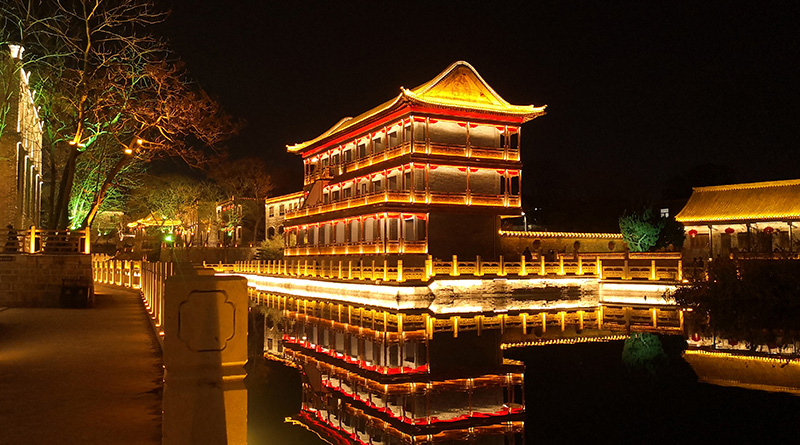
In architectural façades, Wall Washer Lights and linear fixtures can be engineered around façade geometry, mounting positions, and desired beam distribution.
For landscape projects, LED in-ground lights and outdoor spotlights may require specific installation depths, drainage considerations, corrosion protection, and narrow or asymmetric optics.
In retail environments, LED Spotlights can be specified according to beam angle, CRI, CCT, glare control, and merchandise presentation.
Hospitality projects often combine Linear Lighting, wall washers, decorative fixtures, and concealed LED strip systems to create multiple lighting layers while maintaining consistent color performance.
In residential applications, customized LED Strip Light systems, recessed lighting, and architectural fixtures can accommodate cabinetry, ceilings, staircases, coves, and other non-standard spaces.
The common requirement is control over the relationship between light source, optical distribution, physical structure, and installation conditions.
Trends Shaping the Future of LED Manufacturing
The next stage of lighting development is moving beyond simple energy-efficient replacement. Connected controls, sensor integration, tunable lighting, improved optical systems, and more flexible installation architectures are becoming increasingly relevant.
Commercial lighting controls are receiving particular attention because they can combine occupancy detection, daylight response, scheduling, and dimming. Recent evaluations of integrated LED controls have demonstrated substantial reductions in lighting energy use in appropriate applications, although the financial return depends on operating hours, utility rates, installation costs, and control strategies.
Another important direction is greater integration between lighting and building management systems. Wired and wireless control technologies are developing alongside connected building platforms, creating new requirements for interoperability and commissioning.
For manufacturers, this means future competitiveness will depend increasingly on engineering flexibility, digital documentation, testing capability, component consistency, and the ability to integrate lighting hardware with broader building systems.
FAQ: Professional LED Lighting Manufacturing
What should be included in a custom LED lighting specification?
At minimum, define dimensions, input voltage, power, lumen output, CCT, CRI, beam angle, dimming method, operating temperature, IP rating, mounting method, cable requirements, and applicable certifications.
Is a higher wattage LED fixture always better?
No. Wattage indicates electrical consumption, not lighting effectiveness. Beam distribution, efficacy, optical efficiency, color quality, thermal performance, and application requirements should be considered together.
Why is thermal management important in LED fixtures?
LED performance is temperature-dependent. Effective heat dissipation helps maintain stable output and reduces thermal stress on LEDs, drivers, and other components.
What should B2B buyers request before placing a large order?
A technical datasheet, sample, drawings, photometric information, component specifications, applicable test reports, production quality requirements, and clearly defined acceptance criteria are useful starting points.
Conclusion
Selecting a professional LED lighting manufacturer is fundamentally an engineering and supply-chain decision rather than a simple product purchasing exercise. The most important criteria include optical performance, thermal design, electrical reliability, material selection, manufacturing consistency, testing procedures, documentation, and project-specific customization.
For complex commercial, architectural, landscape, and residential projects, well-defined custom lighting solutions can reduce installation constraints and improve consistency across the finished project. As connected controls, energy management, and application-specific lighting continue to develop, manufacturers with strong engineering and quality-control capabilities will be better positioned to support increasingly demanding project requirements.

 Español
 Portugues
 Pусский
 Français
 Deutsch
 日本語
 한국어
 العربية
 Italiano
 Nederlands
 Ελληνικά
 Svenska
 Polski
 ไทย
 Türk dili
 हिन्दी
 Indonesia
 Melayu
 Tiếng Việt
 中文
 dansk
 Magyar
 қазақ
 বাংলা
 עִברִית
 čeština
 Soomaali
 မြန်မာ
 فارسی
 українська
 norsk
 Gaeilge
 беларускі
 Română
 ພາສາລາວ
 Filipino
 lietuvių
 Cymraeg
 македонски
 Suomalainen
 slovenský
 o'zbek
 اردو
 հայերեն
 Igbo
 български
 سنڌي
 Shona
 සිංහල
 Hrvatski
 íslenskur
 galego
 català
 Zulu South Africa
 Afrikaans isiXhosa
 ಕನ್ನಡ
 lëtzebuergesch
 Indonésia Sunda
 Кыргызча
 тоҷикӣ
 Србија
 Twi
 Hawaii
 Cebu
 नेपाल
 euskara
 frissi
 יידיש
 latvija
 slovenija
 kiswahili
 ਪੰਜਾਬ
 پښتو
 საქართველოს
 hua moni
 bosna
 Kreyòl ayisyen
 Eesti
 Gàidhlig na h-Alba
 Samoa
 Монгол
 Azərbaycan
 አማራ
 Shqipëria
 Malagasy
 Malta
 ខ្មែរ
 Chicheva
 中文(繁体)
 ଓଡିଆ
 Setswana
 Afrikaans
 Aymara
 Башҡорт
 Türkmenler
 ትግሪኛ
 Afaan Oromoo
 অসমীয়া
 Kinyarwanda
 Ilocano
 Wolof
 अवधी
 Oluganda
 Bikol
 Fulɓe
 Kikongo
 Sango
 ދިވެހި
 Lingala
 मैथिली
 Tsonga
 ꯃꯦꯏ ꯊꯥꯏ꯫
 brezhoneg
 Furlan
 नेवा
 རྫོང་ཁ
 Santali
 Аҧсуа
 Нохчийн
 Чӑваш
 Татар
 Batak Karo
 دری
 Diura
 Fengyu
 Eʋegbe
 Iban
 Fiji
 Tonga
 Inuktitut
 Nahuatl
 maaya yucatec
 Runasimi
 guarani
 Qafar
 Acholi
 Dinka
 Luo
 Lundi
 isiNdebele
 Tshivenḓa
 Sesotho sa Leboa
 Sesotho sa Borwa
 Ndumbe
 Papuan Pidgin
 Rromani ćhib
 Thok Nath



 Phone
Comment
(0)